




Sunshade Design of Glass Curtain Wall
2024-07-22

Glass curtain wall sunshade design-promote the intelligent building sunshade system
Abstract: in the 20th century, the world building science and technology by leaps and bounds, the rapid development of housing construction, the developed countries building envelope thermal insulation and air tightness can be greatly improved, heating, air conditioning and lighting equipment and technology progress, people are more and more able to live and work in a more favorable and comfortable indoor environment, human architectural civilization has made achievements. At the same time, people have to face a series of serious problems, such as resource depletion, environmental degradation, ecological destruction, climate warming and so on. According to statistics, in China, a developing country, building energy consumption accounts for 27 of the total energy consumption of the society. 6%, with the development of economy and the improvement of people's quality of life, this proportion will continue to grow.
In the 20th century, the world's building science and technology by leaps and bounds, the rapid development of housing construction, the developed countries building envelope thermal insulation and air tightness can be greatly improved, heating, air conditioning and lighting equipment and technology progress, people are more and more able to live and work in a more favorable and comfortable indoor environment, human architectural civilization has made achievements. At the same time, people have to face a series of serious problems, such as resource depletion, environmental degradation, ecological destruction, climate warming and so on. According to statistics, in China, a developing country, building energy consumption accounts for 27 of the total energy consumption of the society. 6%, with the development of economy and the improvement of people's quality of life, this proportion will continue to grow. Emphasis on energy saving, low pollution, low energy consumption of green buildings in line with the requirements of the times, China has also promulgated a series of regulations and policies to make clear provisions on building energy efficiency and rational use of resources.
With the development of China's glass curtain wall heat, last year the country has more than 1.5 million square meters, in recent years, the total area of glass curtain wall more than 3 million square meters. Metal glass curtain wall has the advantages of light weight, incombustible, earthquake resistance, rapid construction and so on. Under the premise of modern urban high-rise, fire prevention, earthquake prevention and construction safety requirements, it has become an irresistible trend and will become the mainstream of high-rise building design in the future. The metal glass curtain wall can reduce the amount of steel and concrete used in the traditional concrete exterior wall, which is of great help to reduce the energy saving and resource saving achieved by the use of high energy consuming building materials. Moreover, the metal glass curtain wall is easier to recycle and can also achieve the purpose of environmental protection.
Glass curtain wall is a modern building more use of the outer envelope structure, is the building heat exchange, heat conduction active, sensitive parts, is the traditional wall heat loss 5 to 6 times, the energy consumption of the curtain wall accounts for about 40% of the energy consumption of the whole building, so the energy saving of the curtain wall has an important position. Necessity of 1. Glass Curtain Wall for Sunshade
The energy-saving design of the building's outer envelope structure is linked by factors such as window opening, orientation, shading and heat insulation materials, which affect the energy consumption of the building. The Silaya Research Office in Taiwan has studied the outer envelope structure of office buildings in Taiwan, and analyzed the energy consumption of each element of the outer envelope structure of the building, and the results are analyzed as follows:
Location Window opening rate Building orientation External shading and glass shading factor Glass Ui value External wall insulation factor
Taipei 49.013.822.31.21.2
From the above it can be concluded that:
1) The window opening rate of the outer wall is the most important factor for energy saving of the outer wall. Reducing the window area rate is the most important means of energy saving, but reducing the window opening rate must also take into account to ensure proper natural lighting and avoid psychological closure. However, for the glass curtain wall that pursues the transparent effect, only the heat insulation design that reduces the area of the open window and strengthens the opaque place can meet the energy saving requirements.
2) External shading and glass shading are the second important factors for energy saving of external walls. Glass materials and external shading all affect the shading rate. However, the installation of external shading such as sun visor and 100-page sun shading is far more effective than changing glass materials. The glass material can choose high reflectivity reflective glass and heat-absorbing glass (only reflective glass with too much reflectivity will cause glare pollution).
3) The architectural orientation factor is the third element of the energy-saving design of the exterior wall (accounting for 12% of the total). A large area of glass curtain wall should be avoided in the east and west. The long direction of the building should be oriented north-south configuration.
In China, with the development of the market economy, building energy conservation is an urgent need for sustainable economic and social development in China. The awareness of energy conservation and environmental protection of construction units and design units has also been continuously improved, and the energy-saving requirements for glass curtain walls have also been continuously improved. The main measures to improve the thermal insulation performance of glass curtain walls at this stage are:
1) the use of coated glass, LOW-E glass, heat reflective glass, insulating glass and other glass processing technology to reduce the sun through the direct radiation of the glass.
2) The application technology of high thermal resistance materials such as aluminum-plastic composite materials and thermal bridge profiles is adopted.
The principle of the above heat insulation measures is relatively simple, so that the heat transfer coefficient of the glass curtain wall structure is greatly reduced. These energy-saving measures have been widely used in the construction stage. Although the use of shading measures in glass curtain wall buildings can achieve better heat insulation and energy saving, in China, the parties at this stage do not pay enough attention to it. The annual air conditioning power consumption of a poorly designed all-glass curtain wall building may be four times that of a typical concrete exterior building. The service life of the glass curtain wall is as long as fifty years, and its energy-saving effect is of course far better than the short-life air conditioners, refrigerators, boilers, etc. Therefore, the energy saving of glass curtain wall buildings is more important than other building products. Therefore, the development of glass curtain wall shading technology is also the building is the most potential tool for energy conservation.
In addition, in the architectural design requirements, when the building has the following conditions (high building standards of the room, only 1 to 2 two) to use shading measures:
1) The indoor air temperature is higher than 29 ℃;
2) When the solar radiation intensity is greater than 240 kcal/m;
3) The indoor depth of sunlight is greater than 0.5 meters;
4) Sunlight exposure to the room for more than one hour;
The use of shading measures is not only a necessary means for the energy-saving design of glass curtain wall buildings, but also a necessary means for the architectural design of high-standard glass curtain wall buildings.
The function and effect of 2. shading
Because the glass curtain wall is composed of glass and metal structure, and the glass surface has strong heat transfer and high heat transmittance, it has a great impact on indoor thermal conditions. In summer, sunlight enters the room through the glass, which is the main cause of indoor overheating. Especially in the hot areas of the south, if the human body is exposed to direct sunlight, it will feel hot and uncomfortable.
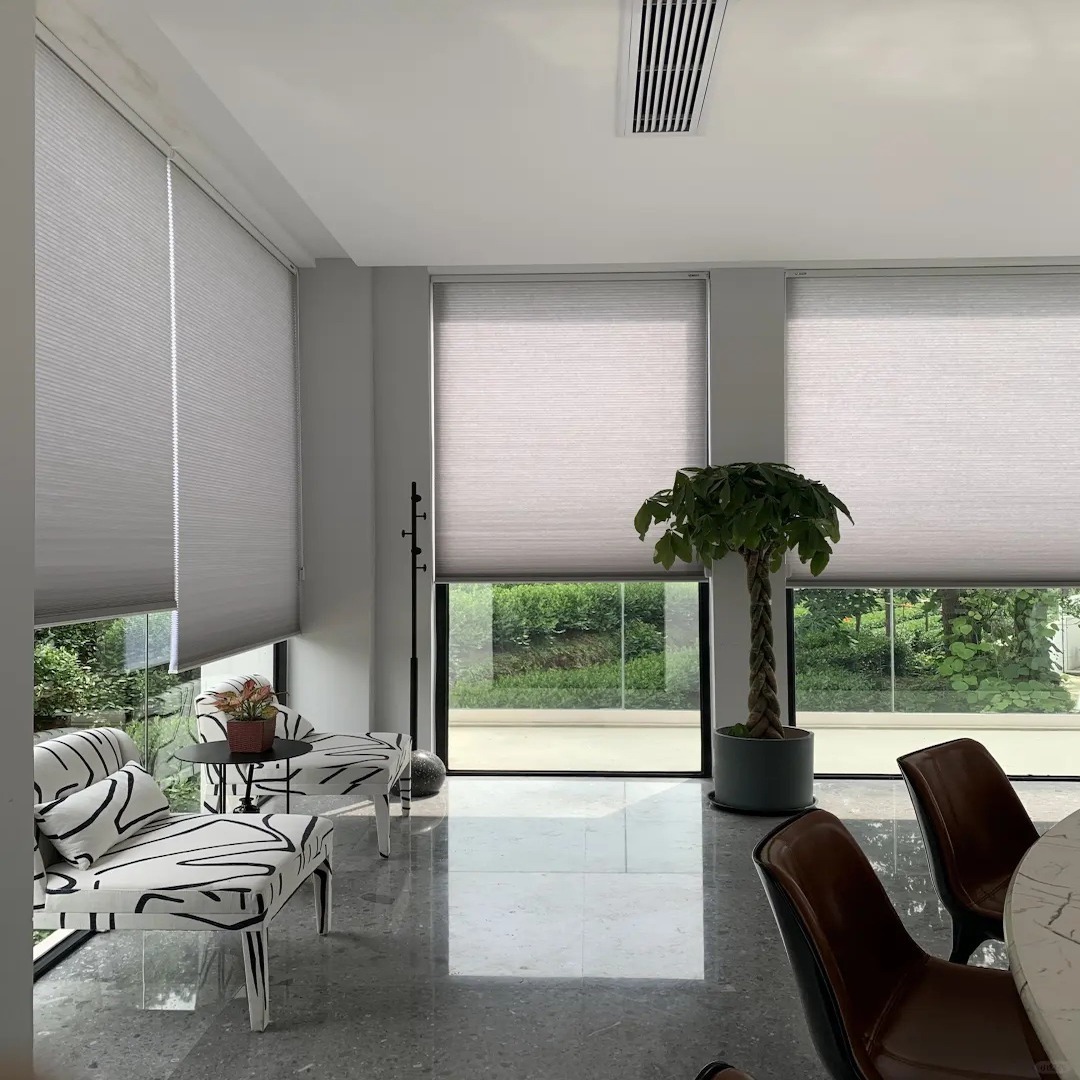
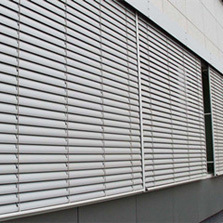
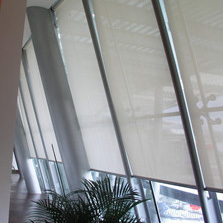
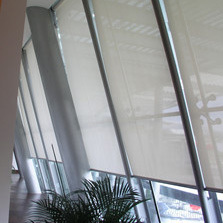
Setting up a shading system on the glass curtain wall can minimize the direct sunlight and avoid indoor overheating. It is one of the main measures for building heat protection in hot areas. After setting the sunshade, there will be the following functions and effects:
1) the effect of shading on solar radiation. The thermal insulation performance of the outer envelope structure is affected by many factors, among which the most influential index is the shading coefficient. Generally speaking, the shading coefficient is controlled by the characteristics of the material itself and the environment. Shading coefficient is the ratio of solar radiation heat through the envelope with shading measures and the envelope without shading measures. The smaller the shading coefficient, the smaller the solar radiation heat through the outer envelope structure, the better the heat protection effect. The shading coefficients of the main orientation windows measured in Guangzhou area are: 17% in the west, 45% in the south and 60% in the north. It can be seen that the effect of shading on shielding solar radiant heat is quite large, and the effect of setting shading measures in glass curtain wall buildings is even more obvious.
2) the effect of shading on indoor temperature. Shading to prevent indoor temperature rise has obvious effect, in a westward room in Guangzhou experimental observations show that: in the case of closed windows, with and without shading, room temperature maximum difference of 2 DEG C, the average difference of 1. 4 DEG C. And when there is shading, the room temperature amplitude is small, the time delay of the maximum value of room temperature appears, and the indoor temperature field is uniform. Therefore, shading can reduce the cooling load of air-conditioned rooms, so for air-conditioned buildings, shading is one of the main measures to save electricity.
3) the effect of shading on daylighting. From the point of view of natural lighting, shading measures will block direct sunlight, prevent glare, make the indoor illumination distribution more uniform, and help the normal work of vision. For the surrounding environment, the sunshade can disperse the reflected light of the glass (especially the coated glass) of the glass curtain wall, avoiding the light pollution caused by the large area glass reflection. However, because the shading measures have the effect of blocking light, it will reduce the indoor illumination, which is more unfavorable in rainy days. Therefore, in the design of shading system to have full consideration, try to meet the requirements of indoor natural lighting.
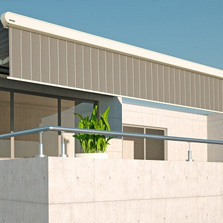
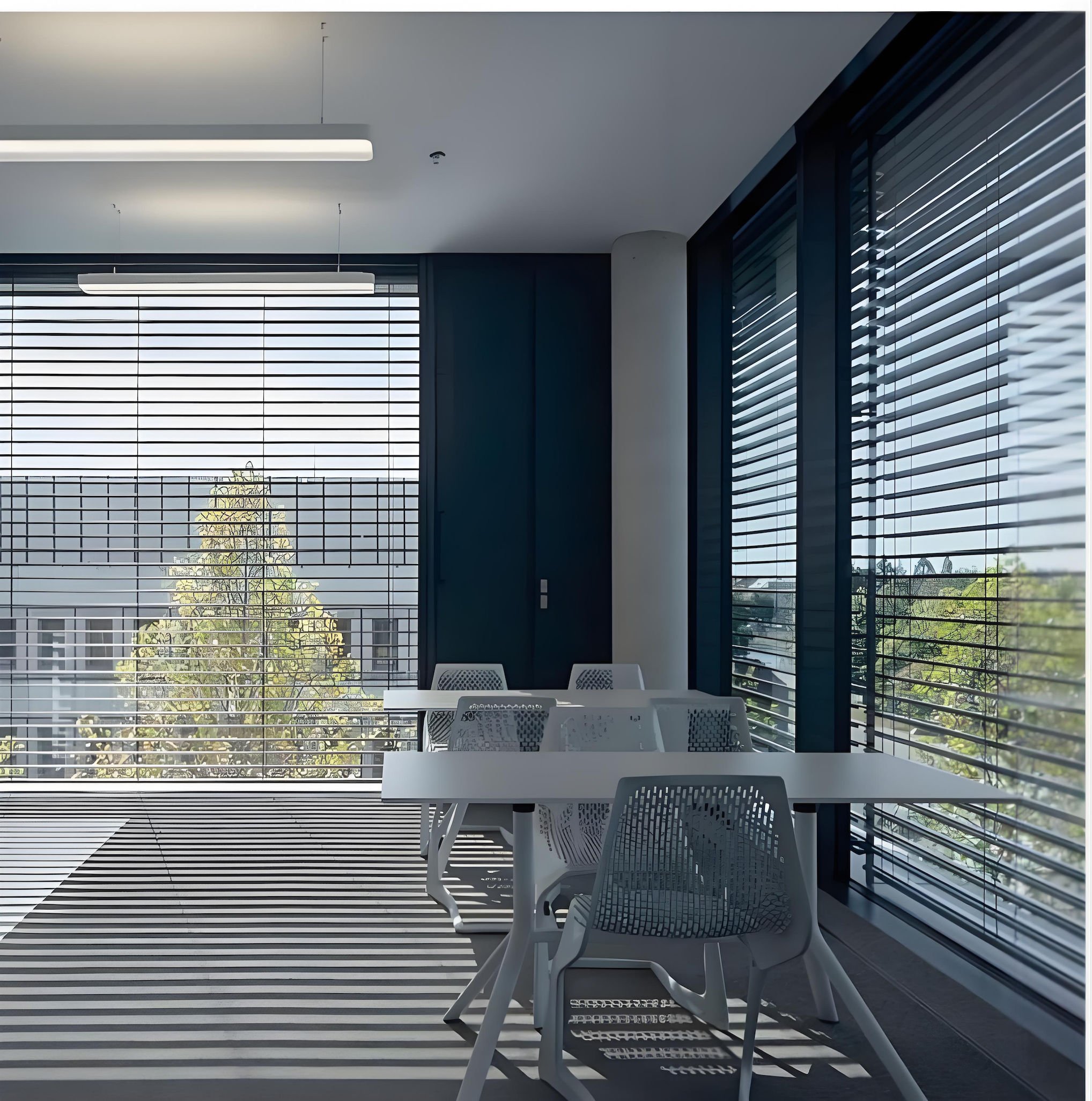
4) the role of shading on the appearance of the building. Most people think that the design of glass curtain wall can only be flat, and it is impossible to design external shading and other shading facilities. However, from many cases abroad, we can find that the metal glass curtain wall can be designed into a beautiful shading form with light metal plates and become an interesting part of architectural modeling.
The shading system forms a light and shadow effect on the glass wall of the glass curtain wall, reflecting the aesthetic effect of modern architectural art. Therefore, in the European architecture, the external shading system has been used as an active facade element, even called the double facade form. The first floor is the facade of the building itself, and the other is the facade form of the dynamic shading state. This kind of "dynamic" building image is not because of the fashion needs of the building facade, but a new modern architectural form produced by modern technology to solve the human demand for building energy conservation and enjoyment of nature.
5) the effect of shading on the ventilation of the room. Shading facilities have a certain blocking effect on room ventilation. When the window is opened for ventilation, the indoor wind speed will be reduced by 22-47%, depending on the structure of the shading facilities. And the hot air rising on the surface of the glass has a blocking effect, adverse heat dissipation, so in the structural design of the sunshade should be paid attention.
Contact Us
Email:
weiye123zheyang@163.com
Phone/WeChat:
+86 10-61427790/50
Address:
No.9 West, North Barracks Industrial Concentration Zone, Niulanshan Town, Shunyi District, Beijing, China
Beijing Welkin Tracery Sunshade Co, Ltd.
Contact number: +86 10-61427790/50
E-mail:weiye123zheyang@163.com
Fax: +86 10 61427750
Address: No.9 West, North Barracks Industrial Concentration Zone, Niulanshan Town, Shunyi District, Beijing, China
Zip Code: 101301

Public Account

Mobile Website
Beijing Welkin Tracery Sunshade Co, Ltd. | SEO Tags