




Building shading energy-saving effect will usher in the sunrise development opportunities
2024-07-22

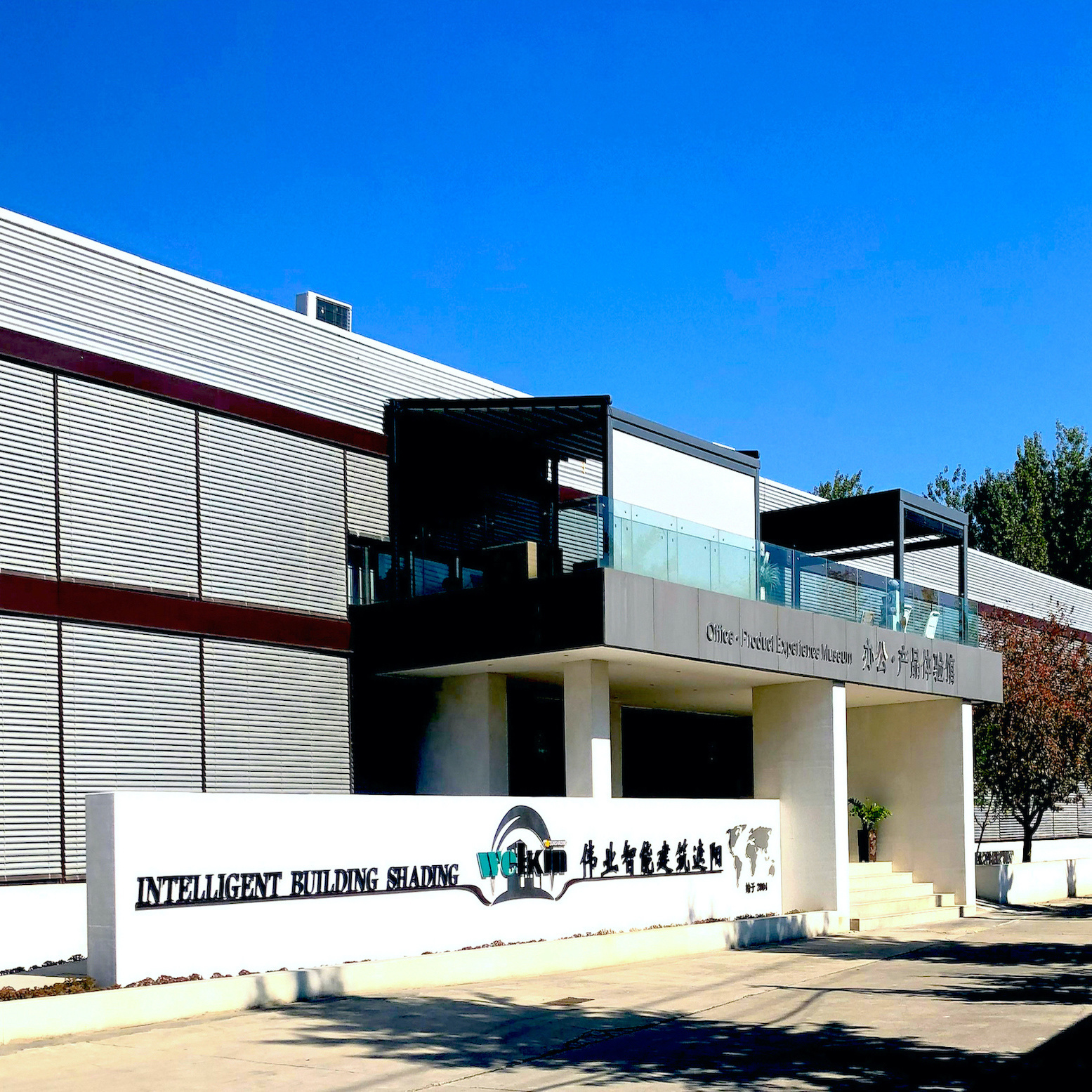
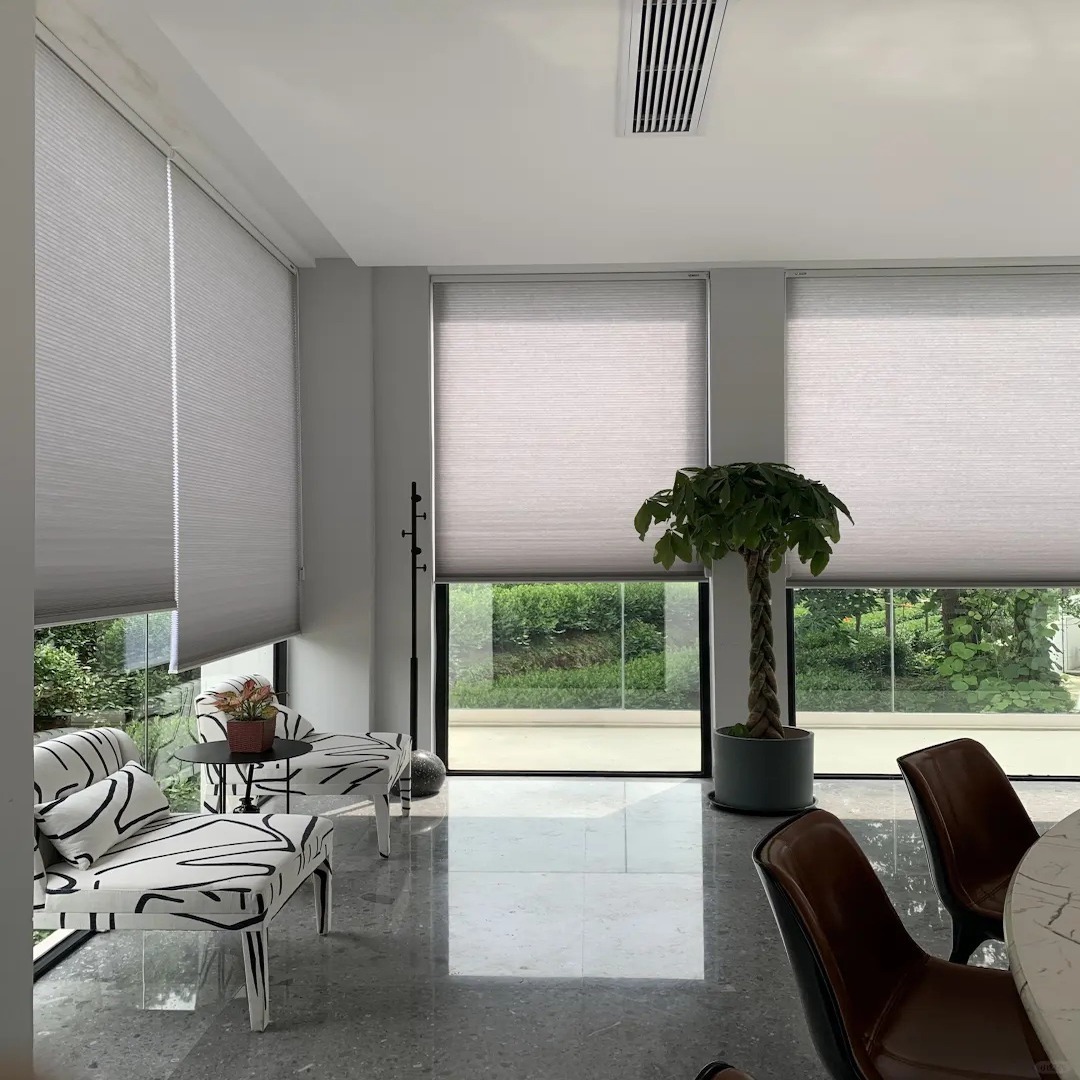
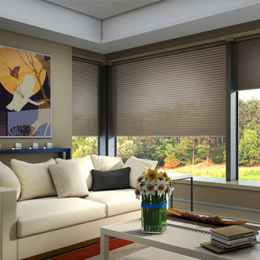
Buildings without sunlight will make people feel depressed, and large areas of glass windows and excessive sunlight cast a shadow on energy conservation and emission reduction. As a result, the building shade into people's vision. It's not the sun that shades away, it's just the power of the sun that gets more human and more comfortable. Through the combination of shading facilities and curtain wall, doors and windows to control the heat absorption and heat release of the building wall, the building can breathe freely and be full of vitality.
In the development of more than 20 years, the continuous introduction of "national policy" and "national standard" has injected "heart strengthening needle" into sunshade. However, the old saying "difficult to promote" is still mentioned. What is the status quo of China's sunshade, in the face of various difficulties in the development of the industry, what do experts say?
At present, China is in the heyday of construction, with an annual housing area of nearly 2 billion square meters, more than the total annual construction area of all developed countries. However, it can not be ignored that more than 90% of the more than 40 billion square meters of existing buildings in China are high energy consumption buildings. It is estimated that by 2020, the national high energy consumption building area will reach 70 billion square meters. Building energy efficiency will be directly related to China's energy supply and economic development.
External doors and windows are the weak link of building energy loss. In high energy consumption buildings, the energy consumption of doors and windows can account for half of the total energy consumption. In summer, a large amount of solar radiation heat enters the room from the window; in winter, a large amount of indoor heating heat escapes from the glass window with poor insulation. Therefore, this highlights the need for architectural shading.
Buildings with good sunshade can save about 25% of building cooling energy, double the thermal insulation performance and save about 10% of building heating energy. From the sunshade effect, the inner sunshade can block 40 ~ 45% of thermal radiation, the middle sunshade can block 65 ~ 70% of radiation, and the outer sunshade can block 85 ~ 90% of thermal radiation.
In 2003, the "Design Standard for Energy Efficiency of Residential Buildings in Hot Summer and Warm Winter Areas" promulgated by the state put forward the requirement of setting up external sunshade for residential buildings in southern China; the "Design Standard for Energy Efficiency of Public Buildings" promulgated in 2005 has mandatory provisions for building sunshade. The adoption of new energy-saving doors and windows curtain walls and the vigorous development of building shading are the objective requirements of China's energy situation and have become an inevitable trend of market development.
In the past 20 years, China's sunshade enterprises have transformed from the initial "decoration and window decoration" company to the professional "sunshade technology" company, and gradually extended to the high-tech field, with more comprehensive supporting facilities for sunshade products. From less than 1000 in 2006 to 3500 in 2010, sunshade products and systems show the development trend of energy saving, material diversification, technology compounding and modern control.
Sunshade as a sunrise industry is booming, but its public awareness and application status still need to be improved. According to a survey conducted by a professional survey company, most Chinese people's awareness of functional finished curtains is still in its infancy. People are used to using cloth curtains because they do not affect indoor lighting and have an obvious intuitive feeling of shading effect in summer. There are not too many requirements for other functions of curtain products such as dimming, perspective, thermal insulation, etc.
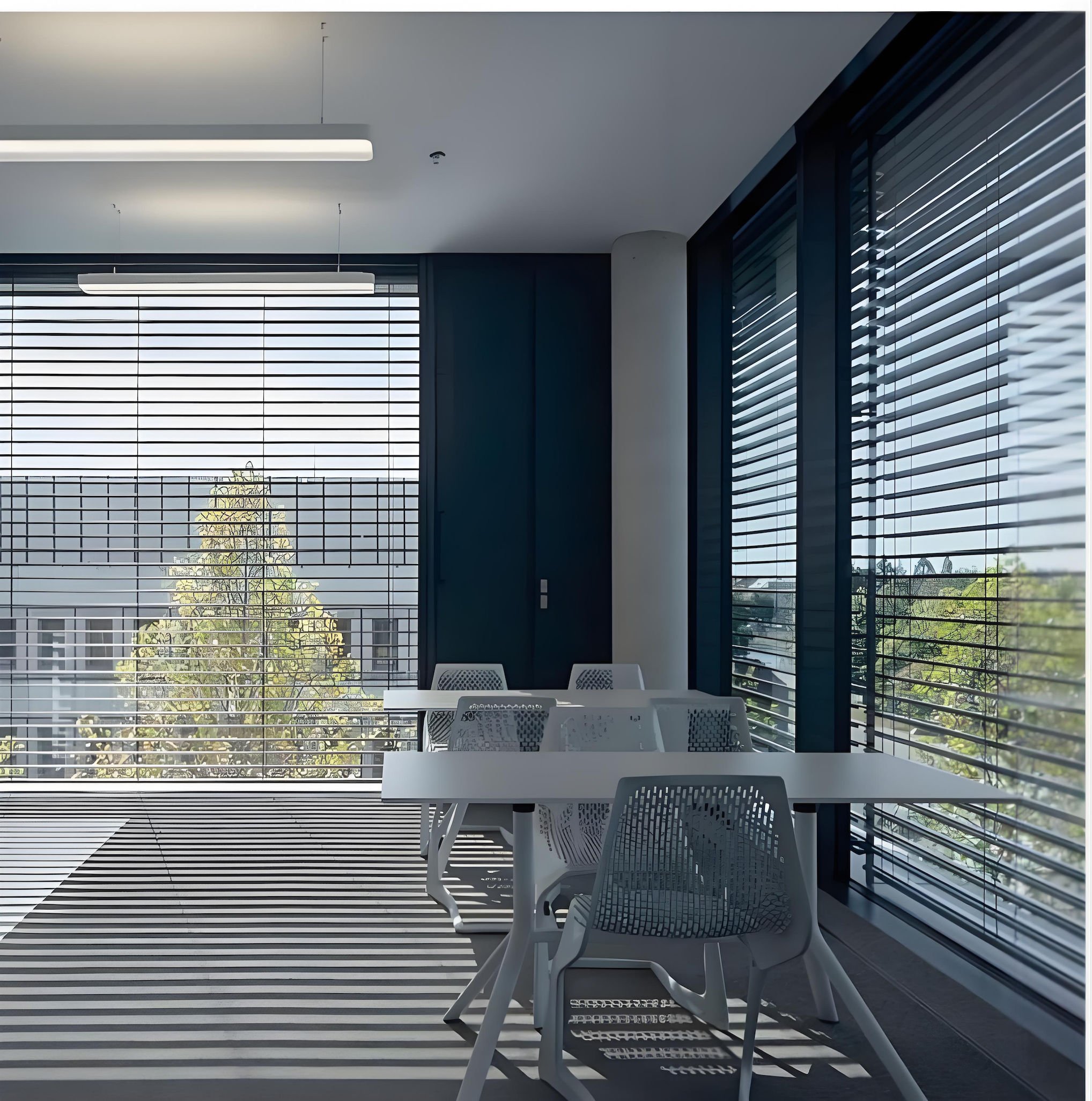
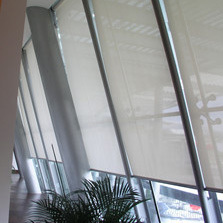
Sunshade is currently the most widely used building shading technology, energy-saving effect is recognized by the industry, especially widely used abroad. Good external shading can not only effectively block a large amount of solar radiant heat, but also significantly improve the softness of indoor light, avoid glare, and improve the privacy and safety of residents. In European cities, almost every household will install various external shading equipment according to different needs. At present, Europe's rolling window production technology and enterprise scale are second to none in the world. The annual market capacity of external sunshade rolling windows in Europe is 16 million sets, of which Germany accounts for 5 million sets.
At the same time, foreign shading technology is also highly unified with the building function and form.
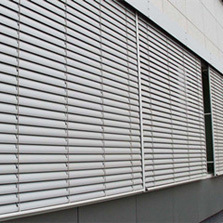
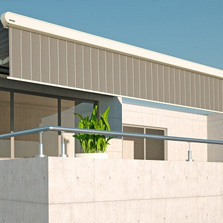
First of all, the installation of the outer sunshade is extremely flexible, horizontal and vertical, and can be installed in all directions. Secondly, there are various forms, including opening and closing wooden sunshade windows, freely retractable fabric or PVC awnings, manual and electric outer sunshade curtains, and adjustable sunshade that can be rolled to any angle and stay in any position. Even those open-air balconies with high height and large depth were cleverly designed by the architects into the most simple outer awning. At present, the development of the sunshade market at home and abroad is still in its infancy. The architectural sunshade demonstration projects mainly come from southern regions such as Jiangsu, Shanghai, and Guangdong, with concentrated regions and relatively single technology types. Although the government has formulated policies to vigorously promote building external shading and first applied it in large public buildings, there are still many problems: most people do not have enough awareness of the role of external shading, and there are few opportunities for external shading products and quality options. Relatively high cost, insufficient quality assurance, etc., all of which urgently need the technological upgrading of relevant enterprises and the improvement of relevant policies.
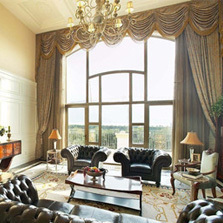
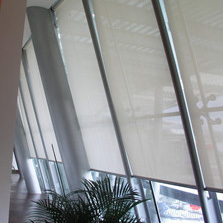
In contrast, the most widely used in China, the user's independent choice of the internal shading situation has not been widely recognized by the industry. Many academic literature can see the description of the shading coefficient of internal shading, but the energy-saving effect of internal shading is not recognized by the industry, and there are difficult problems such as management and control. Yang Shichao, vice president of Guangdong Academy of Building Research, has a more detailed analysis:
One is that almost everyone thinks that internal shading is simply changing the environment and does not save energy. In fact, within the sunshade also has an energy-saving effect, the key lies in how much energy, rather than energy-saving and non-energy-saving issues;
The other is that the internal shading cannot be regulated, because the use of internal shading measures is determined by the user, not by the market, let alone by the government. When architects design glass houses, they may ignore the environmental comfort for a while, but once users feel overheated, they will install internal shading facilities in the decoration. No one recognizes the energy-saving effect of internal shading except the users themselves. Interior shading is not architecturally considered a permanent facility. Therefore, its energy-saving effect cannot be adopted and recognized by the current energy-saving design standards, and the government cannot supervise it.
In addition to the commonly used shading methods, the use of plants to build green curtain walls to shade buildings, especially in the window part, has also begun to receive attention. For example, planting evergreen plants in high-temperature, humid and dry climates, using deciduous vine plants or trees to the north of the house every year under other climatic conditions, and using deciduous plants or evergreen trees to the east and west, can reduce unwanted strong light and heat gain and beautify the environment. "National policy" and "national standard" boost building shading
The state attaches great importance to doors and windows and sunshades with broad energy-saving prospects, and many policies and standards are specifically related to the promotion of energy-saving doors and windows and building sunshades. In 2008, Article 28 of the "Regulations on Energy Conservation of Civil Buildings" promulgated by the State Council clearly stipulates: "The implementation of energy-saving renovation of existing buildings shall comply with the mandatory standards for energy conservation of civil buildings, and priority shall be given to low-cost renovation measures such as shading and improved ventilation".
As problems such as lax norms and lack of standards in the sunshade industry have surfaced, starting from December 1, 2009, four sunshade standards such as "Test Method for Wind Resistance of Sunshade Products Outside Buildings" and "Test Method for Operation of Sunshade Products in Buildings" have been formally implemented, and some industry standards are also being formulated. More than 20 specific shading standards that have been implemented and are being formulated will constitute a relatively complete shading standard system in China.
Some people say that China's sunshade industry is about to enter the era of the Great Leap Forward, and some experts say that it will take time to further prove where the industry will go. The building sunshade industry is still facing many problems to be solved: standard setting still lags behind the rapid development of the industry, the vacancy of domestic industry-university-research platform, and the products are not rich and diverse. But in any case, as a means of easy operation and remarkable energy-saving effect, building sunshade will stride forward under the background of developing green economy and creating a conservation oriented society in China.
Contact Us
Email:
weiye123zheyang@163.com
Phone/WeChat:
+86 10-61427790/50
Address:
No.9 West, North Barracks Industrial Concentration Zone, Niulanshan Town, Shunyi District, Beijing, China
Beijing Welkin Tracery Sunshade Co, Ltd.
Contact number: +86 10-61427790/50
E-mail:weiye123zheyang@163.com
Fax: +86 10 61427750
Address: No.9 West, North Barracks Industrial Concentration Zone, Niulanshan Town, Shunyi District, Beijing, China
Zip Code: 101301

Public Account

Mobile Website
Beijing Welkin Tracery Sunshade Co, Ltd. | SEO Tags