




The principle, function and development trend of external shading
2024-07-22

The concept of shading outside the 1.
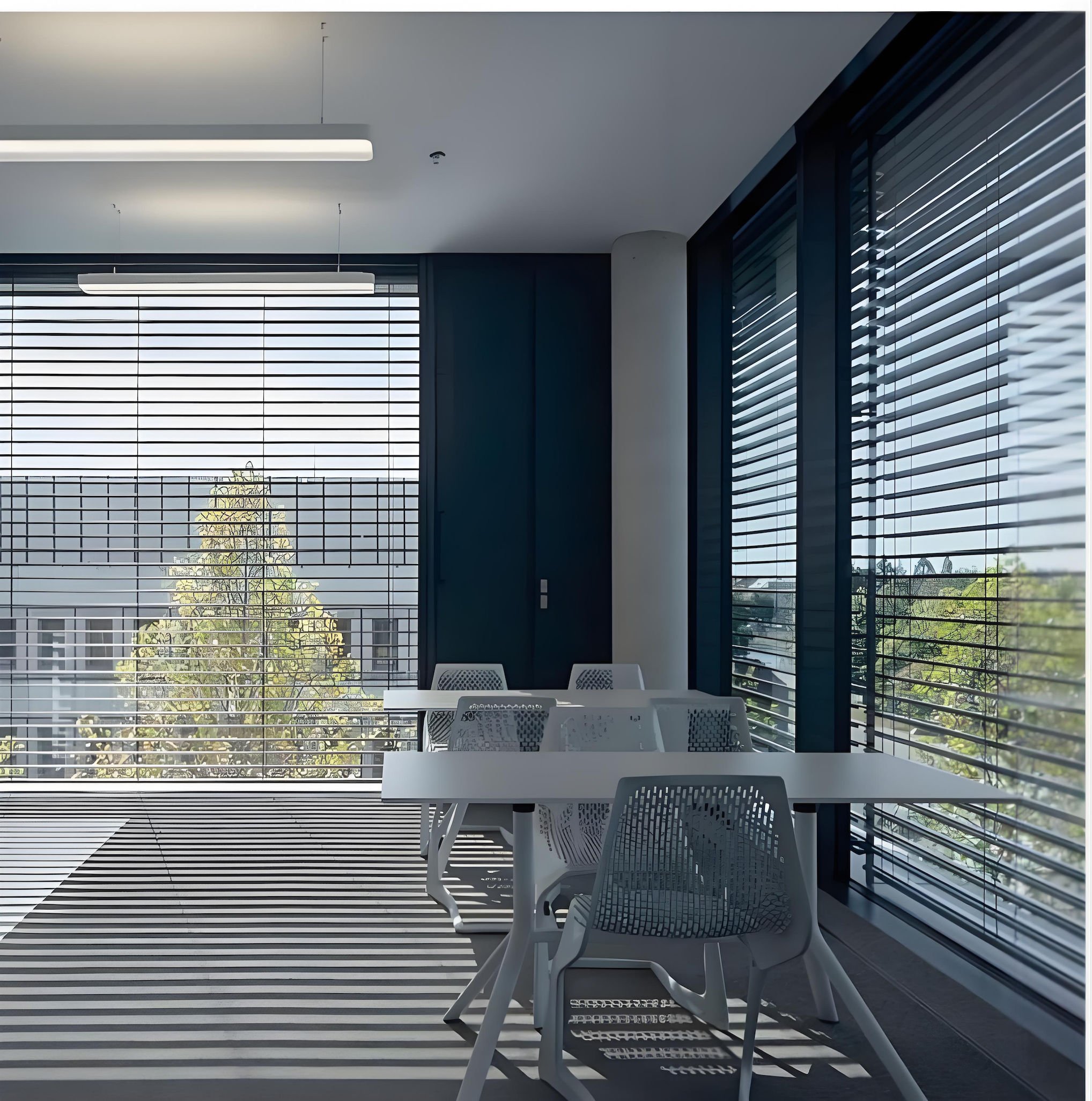
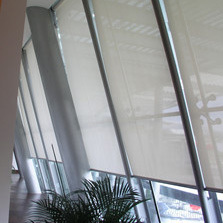
The shading system is divided into inner shading and outer shading according to the relative position between its installation position and the building wall surface. The outer shading is a device installed outside the transparent enclosure of the building to block sunlight.
Principle, Function and Development Trend of 2. External Sunshade
Principle:
Exterior shading is the use of a physical way to block solar radiation and solar rays from entering the interior through the building envelope. The heat transfer methods are: heat conduction, heat convection and heat radiation. Since the energy transfer of solar radiation is mainly thermal radiation, we focus on the impact of thermal radiation on the indoor environment. When solar radiation occurs in the form of light, it is divided into three main bands: infrared, visible light, and ultraviolet light. Among them, ultraviolet light heat accounts for 3% of the total heat, visible light accounts for 44%, and infrared light accounts for 53%.
More than 50% of the energy consumption of buildings is air conditioning energy consumption, and half of the energy consumption of air conditioning is due to the loss of doors and windows, so the significance of shading outside the doors and windows of buildings is relatively large.
Role:
External shading is one of the effective methods of building energy-saving design to block solar radiant heat from entering the room and avoid indoor heat loss in winter in China's hot summer and cold winter areas, especially in summer. External shading devices can also improve the thermal and optical comfort of living.
Development trend:
The real external shading must meet the three conditions of shading and heat insulation, light transmission, ventilation and ventilation. Only when these three conditions are met at the same time, is the real external shading.
3. shading coefficient
1. Explanation of shading coefficient?
The ability to block or resist the sun's rays and radiant heat.
2. There are four kinds of representation methods of shading coefficient, which are glass shading coefficient Se, outer window shading coefficient SC, outer shading coefficient SD and comprehensive shading coefficient SW.
3. What is the glass shading coefficient Se (shading coefficient)? It refers to the ratio of the transmission of the sun penetration test shield to the standard shield (3mm ordinary colorless transparent glass).
Exterior window shading coefficient SC(shading coefficient of external window) What is the ratio of radiant heat through the outer window (including window frame and glass) to the radiant heat through the same area of standard windows (including window frame and 3mm thick transparent glass) under given conditions.
5. External shading coefficient SD(external solar shading coefficient of window) The ratio of the radiant heat penetrating into the room when the glass curtain wall of the building has external shading facilities to the indoor radiant heat penetrating into the room when there is no external shading facilities under the same conditions.
6. Comprehensive shading coefficient SW,(integrated shading coefficient of external window). The product of the shading coefficient of the glass and the shading coefficient outside the window.
Classification of 4. external shading
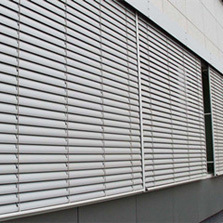
1. The louver flap category, including aluminum alloy flap, glass flap, solar flap, etc.; The disadvantage is that it requires integrated construction when the building is newly built, and the cost is too high.
2. Outdoor venetian blinds, including electric venetian blinds and manual venetian blinds; The disadvantage is that it is easy to connect gray, block the sun's rays, easy to deform, easy to damage, difficult to maintain, low reliability of the mechanism, and is not suitable for high-rise buildings.
3. Outdoor hard roller blinds, including aluminum alloy hard roller blinds, aluminum alloy foamed hard roller blinds, plastic steel hard roller blinds, PVC hard roller blinds and others (wood, etc.); The disadvantage is that the light is also blocked when shading, not transparent, not breathable, single style, no aesthetics.
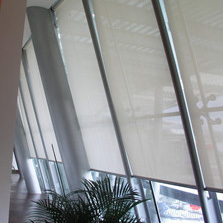
4. Outdoor soft roller shutter, including electric roller shutter window, crank rocker drive soft roller shutter and pull bead drive soft roller shutter; The disadvantage is that it can not be guaranteed for outdoor wind resistance.
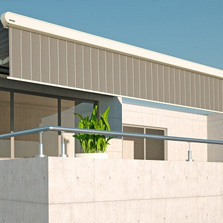
5. Awnings, including curved arm awnings, swing awnings, inclined awnings, folding awnings, fixed awnings and rail awnings; the disadvantage is that the cost is too high and the mechanism is not reliable. High, poor wind resistance effect, not suitable for high-rise buildings.
6. Sunshade membrane structure, including inflatable membrane structure and tensile membrane structure.
Comparison of the advantages of 5. external shading and internal shading
1. The shading effect of external shading is better than that of internal shading. The installation of outdoor shading system can reduce the indoor temperature by 7 ℃-8 ℃, saving 40%-60% of air conditioning energy consumption, and the installation of indoor shading system can reduce the indoor temperature by 4 ℃-5 ℃, saving 30%-45% of air conditioning energy consumption. In terms of energy saving, the outdoor shading system is better than the indoor shading system.
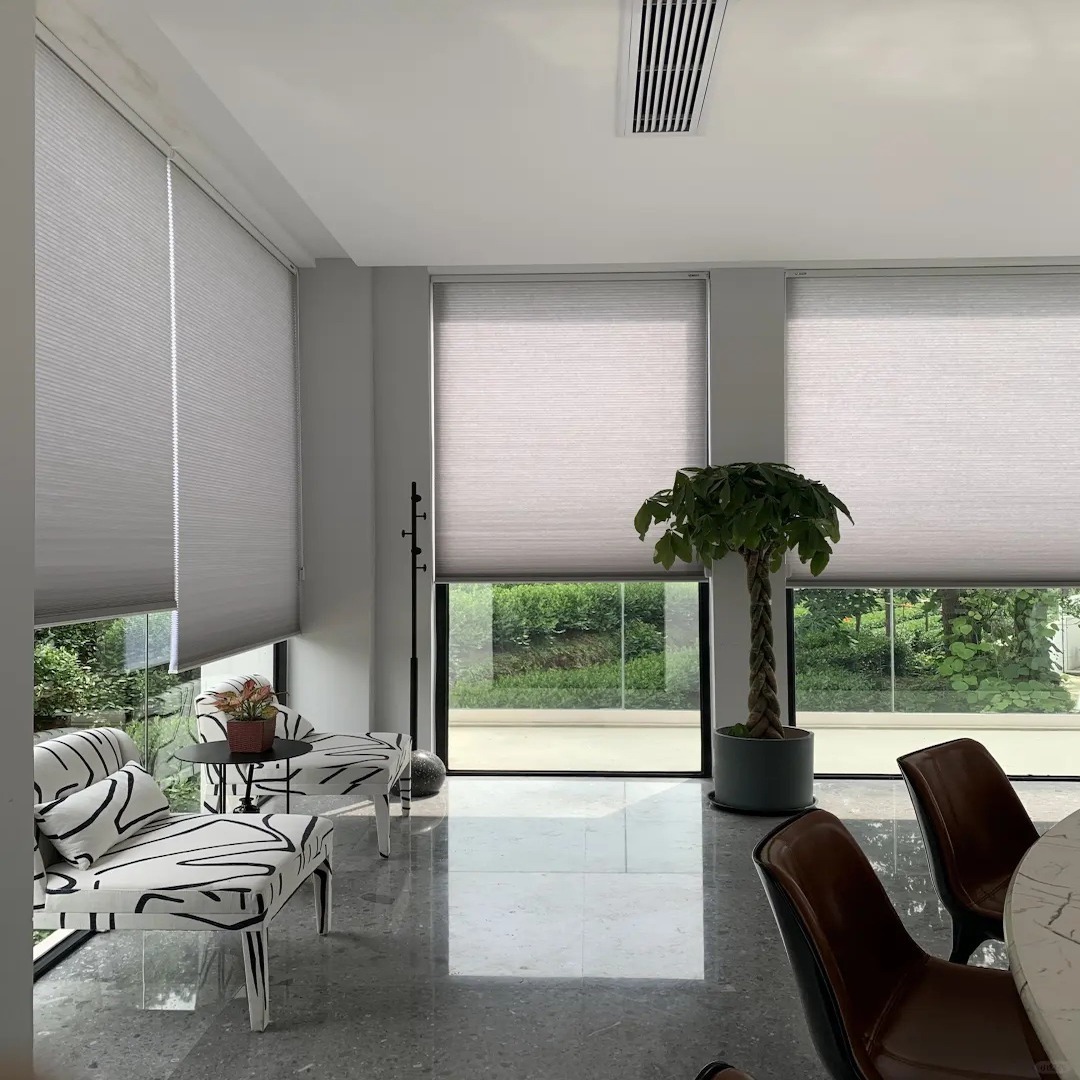
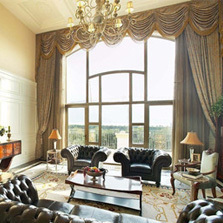
2. The external shading system is shielded before the solar radiation reaches the glass curtain wall, and because there is a flow of air between the external shading facility and the window to take away the heat, the heat will not have the opportunity to enter the room. The internal shading is processed after the solar radiation enters the room, forming a heat island effect between the curtain and the glass. The curtain has no sealing effect in the room, and the heat is easily diffused in the room.
6. outer sunshade advantage products
Superior product requirements for external sunshade: transparent, low carbon and energy saving, green and environmental protection, sunshade and heat insulation, wind resistance and compression resistance, fire retardant, self-cleaning and easy cleaning, fashionable and beautiful, etc. To sum up, the products that can meet the requirements can only be "wind-resistant outer sunshade products for high-rise buildings" with excellent wind resistance and flame retardancy, because their wind resistance and fire resistance can meet all requirements.
Contact Us
Email:
weiye123zheyang@163.com
Phone/WeChat:
+86 10-61427790/50
Address:
No.9 West, North Barracks Industrial Concentration Zone, Niulanshan Town, Shunyi District, Beijing, China
Beijing Welkin Tracery Sunshade Co, Ltd.
Contact number: +86 10-61427790/50
E-mail:weiye123zheyang@163.com
Fax: +86 10 61427750
Address: No.9 West, North Barracks Industrial Concentration Zone, Niulanshan Town, Shunyi District, Beijing, China
Zip Code: 101301

Public Account

Mobile Website
Beijing Welkin Tracery Sunshade Co, Ltd. | SEO Tags